












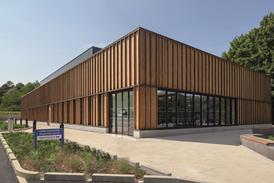

More Focus – Page 89
-
 Features
Sustainability - office energy saving
As the introduction of the MEES regulations draws closer, it can be difficult to know which energy-saving measures offer the best returns in commercial buildings
-
 Features
Market review: Subdued growth
Construction output continues to dip against a background of rising inflation and slowing wider economic growth
-
 Features
All over the place
The differences between regulations in the four UK nations have grown since some legislative powers were devolved in Scotland and Wales
-
 Features
International cost comparison 2017
Construction markets around the world are experiencing relatively subdued but steady growth. As construction cost continues to escalate in most places, the relationship between productivity and cost continues to draw scrutiny. William Waller analyses the results of the 2017 Arcadis annual survey of global construction costs
-
 Features
Lessons from Grenfell
As the inquiries into the Grenfell Tower fire get under way, Joey Gardiner looks at the construction issues that may have played a part in the tragedy and asks what the industry hopes to learn
-
 Features
North and South: George Osborne talks to Building
George Osborne talks to Building , reflecting on the ‘northern powerhouse’, infrastructure, Brexit and his hope that the current government will finish the job he started
-
 Features
What to specify: Doors and windows
The National Gallery has chosen large doors that match its granite flooring, a Welsh fire station has been fitted with thermally efficient products, and the Design Museum has specified ironmongery
-
 Features
Party conference season 2017: Any answers?
The shifting sands of this year’s political terrain have left a lot of questions. Will conference season deliver any clarity?
-
 Features
An architectural side note
The £57m Birmingham Conservatoire’s quiet restraint has produced an anonymous facade that conceals rather than celebrates the elegant music spaces within
-
 Features
Cost update Q2 2017
Materials cost inflation continues to rise, although the effects of sterling’s weakness are filtering out slightly and the increase in input costs has slowed.
-
 Features
Back to school: Summing up the savings
What effect will changes to funding have on the construction and education sectors, and what precedent it could set for the future?
-
 Features
Back to school: Funding formula
Universities’ investment in their campuses continues to be strong but for how much longer? Brexit and Labour’s election pledge to scrap fees are giving vice-chancellors the jitters.
-
 Features
Back to school: The human touch
OMA’s first science building, Lab City engineering school near Paris, humanises its rational grid structure through a system of streets and squares bathed in natural light.
-
 Features
Cost model: Operating theatres
It is critical to ensure that surgical theatres are fit for purpose and appropriate for rapidly advancing medical practices
-
 Features
Safety in numbers
The Definitive Guideline to health and safety sentencing was brought into force last year, signalling larger and more discretionary fines. What is its impact so far on SMEs in particular and what does it signal for safety in the sector?
-
 Features
Tracker: July 2017
The total activity index remained stable in July. The R M index grew and returned to positive territory and the orders index was one point up from June’s figure. Experian Economics reports
-
 Features
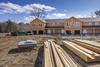
Market review: Looking downwards
Construction activity has declined during the second quarter, despite overall UK growth, and contract values are decreasing
-
 Features
London's High Point: Race to the top
In creating the UK’s tallest build-for-rent development – Highpoint in London’s Elephant and Castle – flexibility, efficiency and speed were key concepts for contractor Mace and structural engineer AKT II
-
 Features
PFI: In the balance
With the risk of taking on work rising and the pipeline of promised projects yet to materialise, is the fate of PFI as a funding mechanism up in the air?
-
 Features
Procurement update: Uncertain markets
Clients are returning to package-based procurement to get better value from their supply chain, even though this involves taking on much more risk